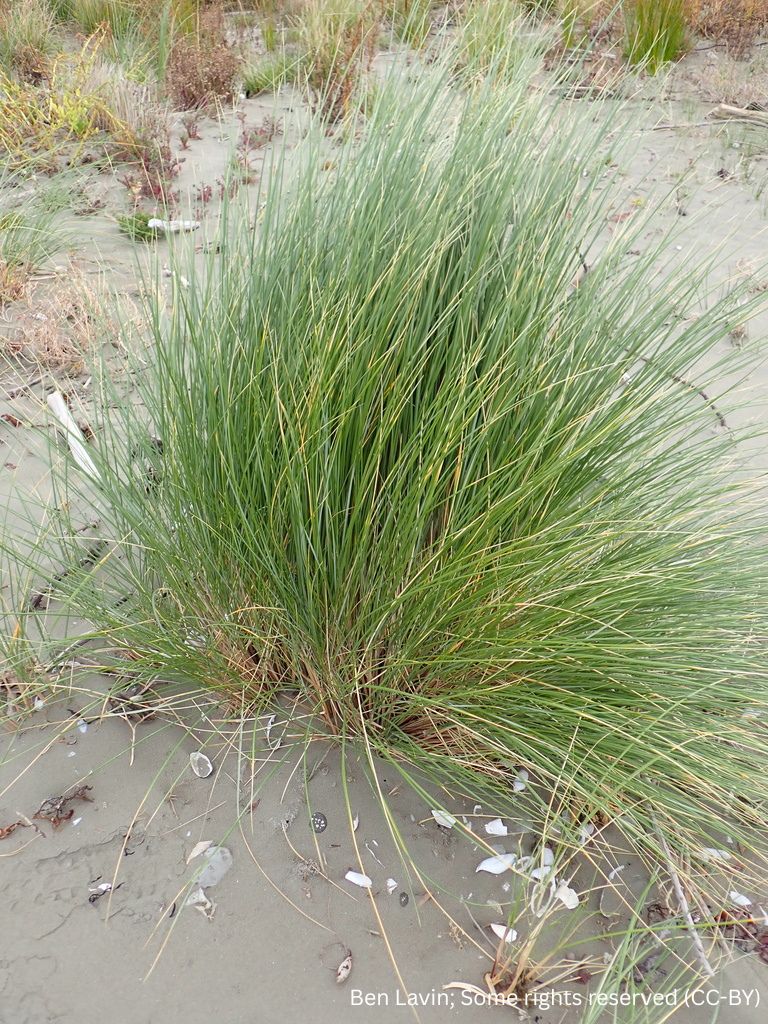
Marram grass (Calamagrostis arenaria) was once planted widely to stabilise dunes, but it has since become a major invader. Spreading rapidly by seed and underground rhizomes, it forms steep, uniform dunes that look very different from the naturally rolling shapes created by native species like spinifex and pīngao. These altered dunes are less stable, more prone to erosion, and destroy nesting habitat for shorebirds.
Because marram is now widespread, full eradication is not possible. Instead, our focus is on managing priority sites: replacing marram with native sand-binding plants and planting trees in more stable areas to shade it out. Long-term success relies on re-establishing resilient native dune ecosystems while keeping marram in check.