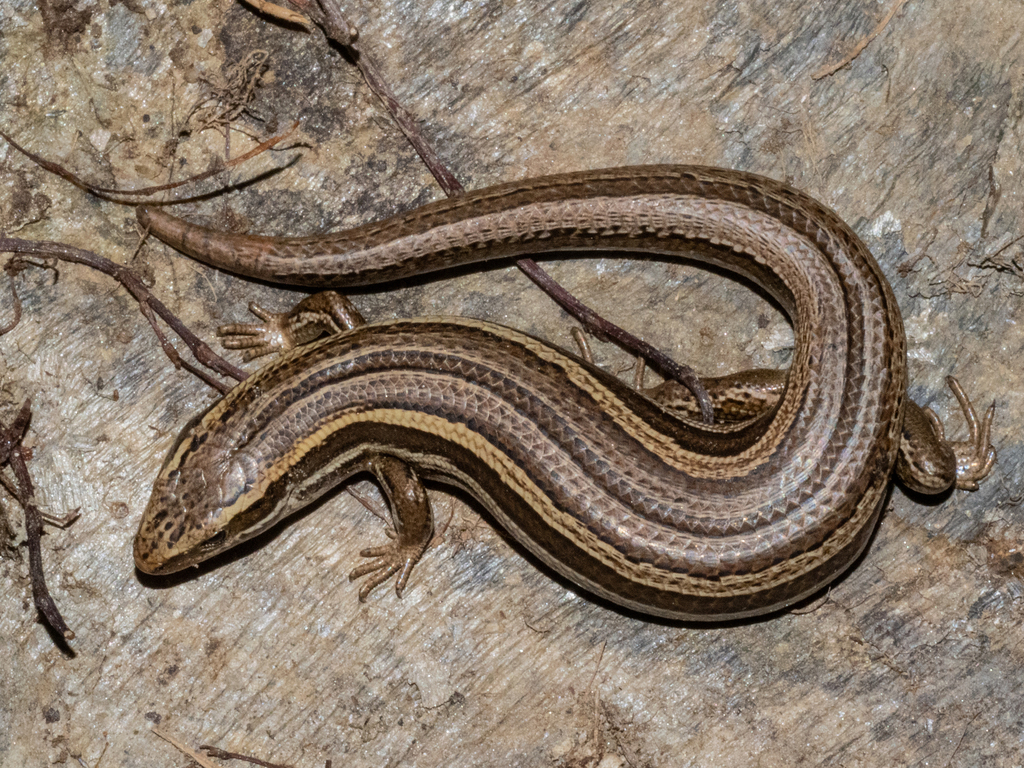
The Waiharakeke grass skink (Oligosoma aff. polychroma Clade 2) is a small to medium-sized, sun-loving skink found across eastern Marlborough and along the Kaikōura Coast. Once considered part of the “common skink” species, it is now recognised as a distinct regional form.
These skinks vary in colour from brown to olive, often with pale stripes running along the sides and back. Some individuals also show dark flanks and a light stripe above the forelimbs. Their slender bodies and quick movements make them well adapted to life in grasslands and open habitats.
Waiharakeke grass skinks are diurnal (active by day) and can often be seen basking on rocks, logs, or tussock. They live in a wide range of environments – from coastal dunes and scrub to inland grasslands and even modified farmland.
They are viviparous (live-bearing), producing up to six young in late summer. Their diet includes insects, spiders, and other small invertebrates, as well as berries and nectar from native plants.
Although still relatively widespread, Waiharakeke grass skinks are declining due to predation by introduced mammals and habitat loss.
Source: https://www.reptiles.org.nz/herpetofauna/native/oligosoma-aff-polychroma-clade-2