Haere mai ki te taiao – come to this place of nature.
Stretching along Marlborough’s wild east coast, Marfells, Ward and Waima beaches offer a mix of natural beauty, rich history, and unique wildlife. From the iconic Cape Campbell Lighthouse walk to the dramatic rock formations uplifted by the 2016 Kaikōura earthquake, this coastline is full of treasures and experiences.
Whether you’re here to walk, explore fascinating geology, or simply enjoy the company of seabirds and seals, this is a place where nature still takes the lead.
Marfells Beach to Cape Campbell
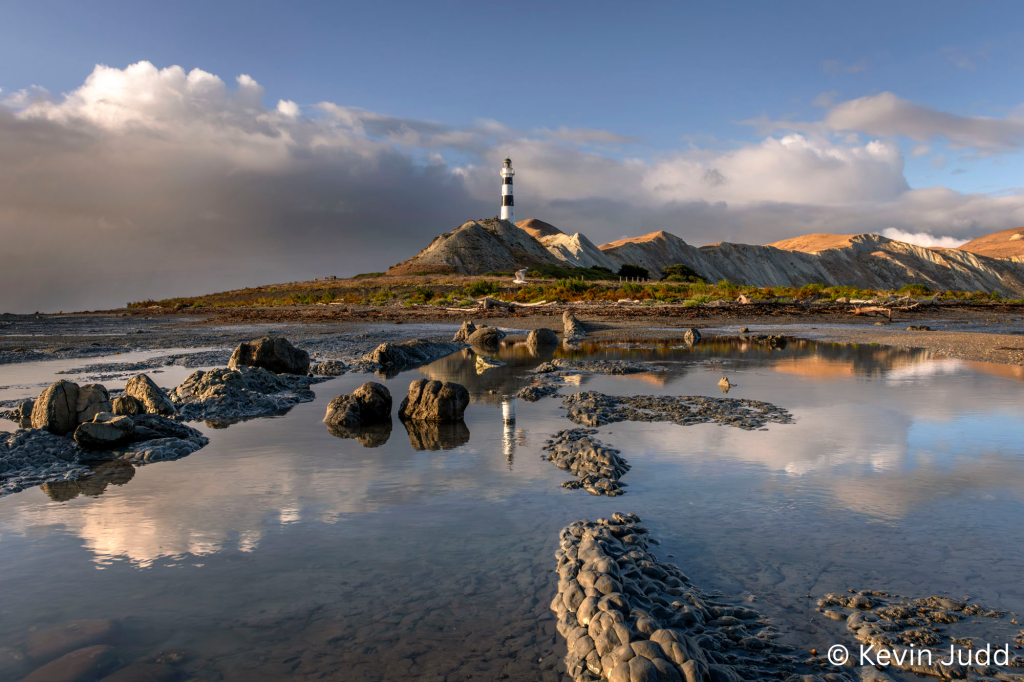
Take a walk along the coastline to the striking Cape Campbell Lighthouse. The current lighthouse was built in 1903, replacing the original 1870 structure.
This is a half-day walk with stunning views, but it does require planning. Tides are critical: at high tide, access is blocked around the bluffs and along the second half of the track to the lighthouse. This section should only be attempted at low tide, so please check tide tables before you set out.
Beyond the first headland, land above the high-tide mark is privately owned, so please remain on the beach.
Ward Beach
Ward Beach is a dramatic stretch of rugged coastline, famous for its unusual rock formations and unique geology. Highlights include:
- Uplifted reef platforms – raised over 2 metres during the 2016 Kaikōura earthquake.
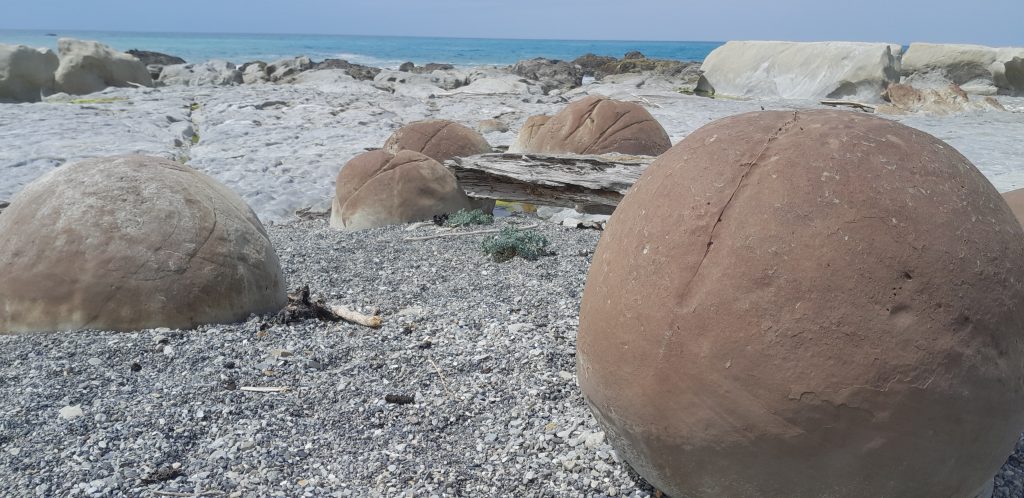
- Ward Beach boulders – spherical concretions scattered along the shore.
- Chancet Rocks – located 1.5 km north of the Ward Beach road end, in a scientific reserve. These formations contain rare trace fossils and some of the best on-land evidence of the Cretaceous–Paleogene boundary in the Southern Hemisphere.
This is a must-see spot for geology enthusiasts, photographers, and anyone who enjoys a truly dramatic coastline.
Waima/Ure River mouth
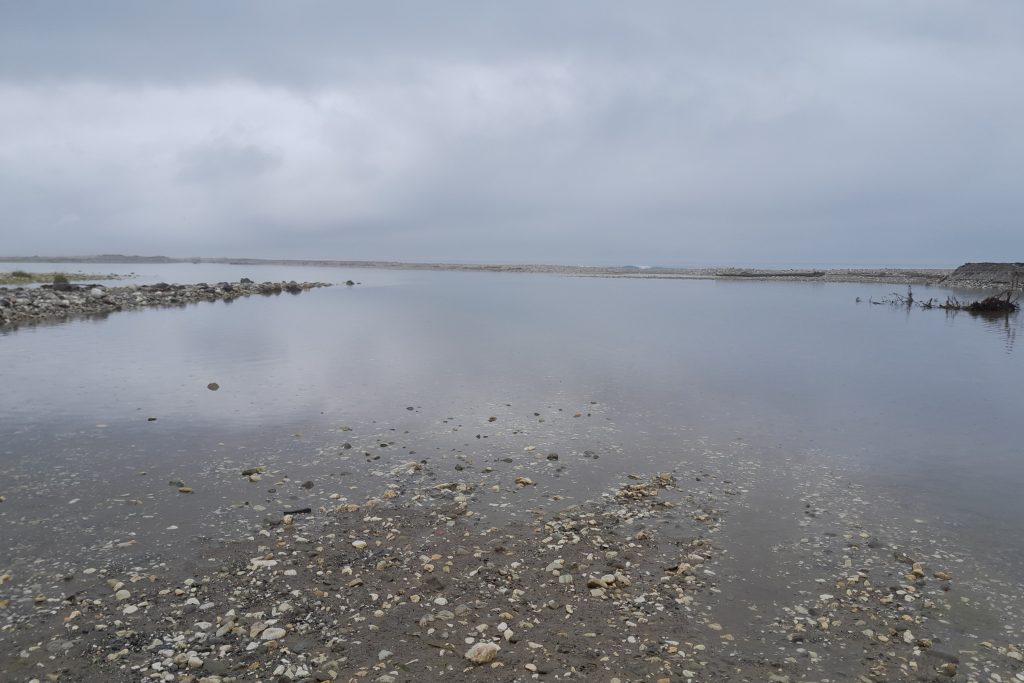
The lower reaches of the Waima (meaning white water, due to the limestone in the river bed) or Ure River forms a braided river. It is an important resting and nesting site for threatened birds such as the banded dotterel, white-fronted tern and black-fronted tern.
Respecting the wildlife
Toro mai, engari kia tōtika te haere. Visitors are warmly encouraged to tread lightly, respect wildlife, and take the time to experience the coast at its own rhythm.
Nesting Birds
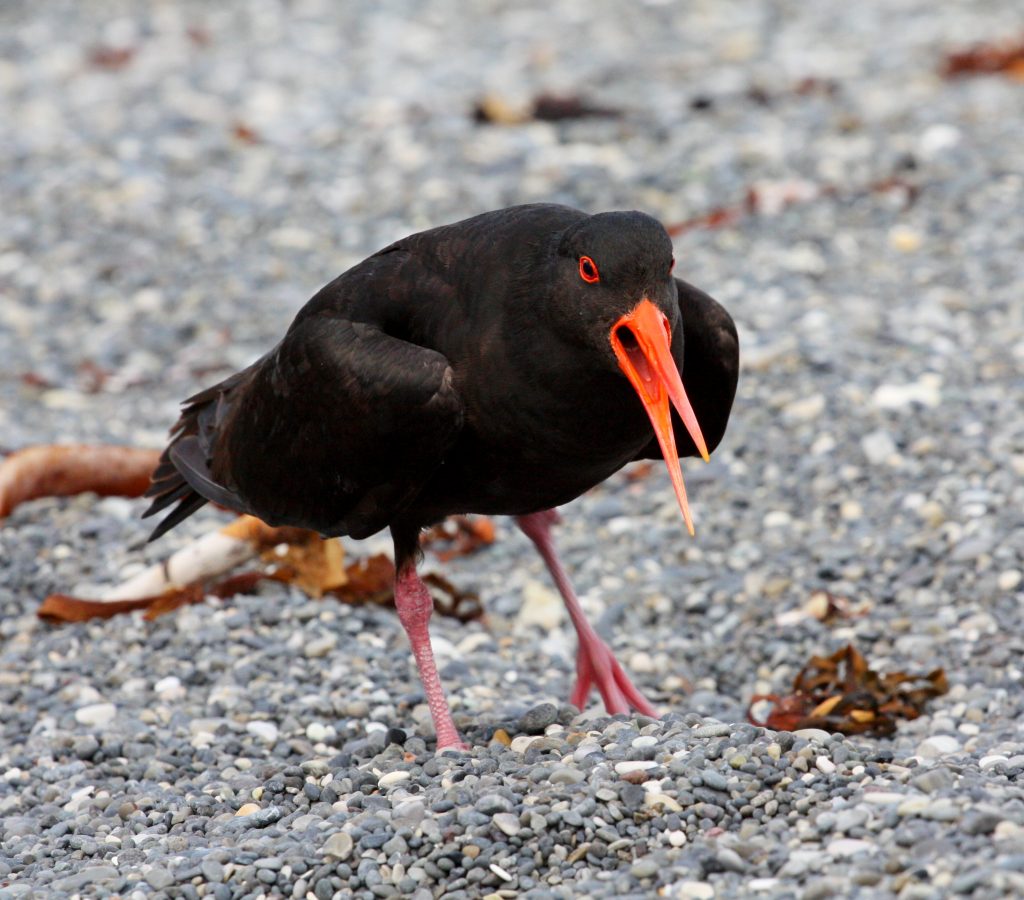
The coastline is home to nesting shorebirds such as banded dotterels and variable oystercatchers. Their nests are simple scrapes in the shingle, often containing pale, speckled eggs that are perfectly camouflaged but very easy to step on.
Disturbances from people, dogs, or vehicles leave eggs and chicks exposed causing nest abandonment or death if exposed too long or too often.
During the nesting season (August–February):
- Avoid areas above the high tide line.
- If a bird flaps, chirps loudly, or pretends to have a broken wing, you’re close to a nest – please move quietly away.
Dogs
Dogs are welcome, but rules apply to protect wildlife:
- On-leash: Marfells Beach to Mussel Point, Ward Beach boat ramp to Chancet Rocks, and south of the ramp to Needles Point.
- Off-leash: Marfells Beach boat ramp area, and the Ward Beach boat launching area.
- No dogs allowed: Marfells Beach campsite, Mussel Point to Chancet Rocks, and south beyond Needles Point to the Marlborough District Council boundary. These are sensitive wildlife breeding areas.
Please check the Marlborough District Council dog exercise areas for full details.
Vehicles
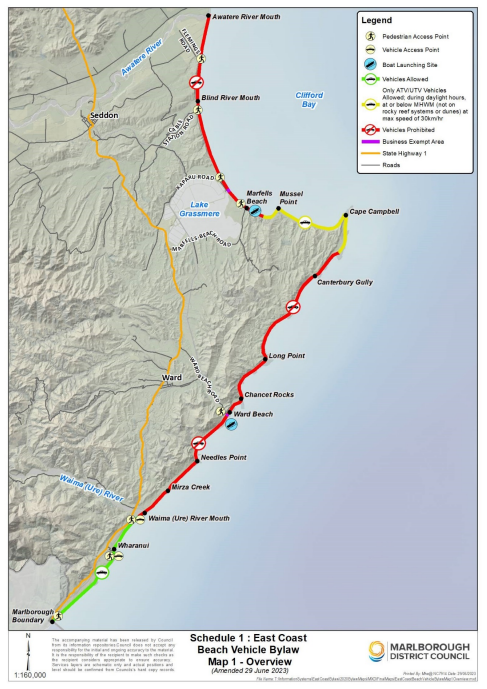
The Marlborough District Council East Coast Beach Vehicle Bylaw prohibits most vehicles on beaches from the Awatere River mouth south to the Waima/Ure River mouth. Exceptions include designated boat launching areas and a specific “yellow zone” for ATVs/UTVs, and all vehicles are banned from dunes and reefs. Non-motorised activities, such as walking, cycling, and horse riding, remain unrestricted.
Seals
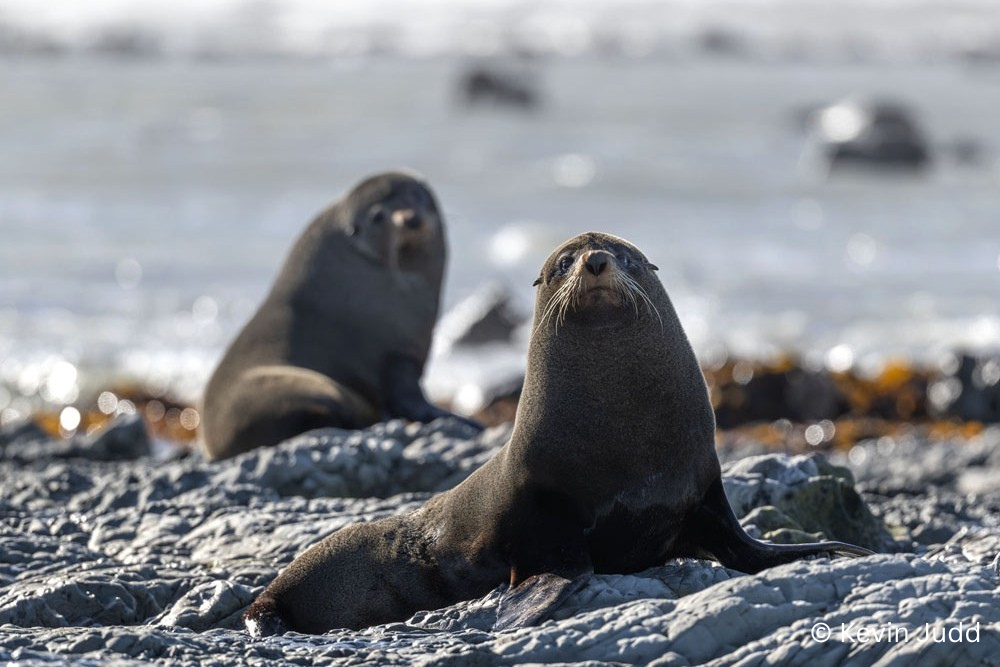
Seals are often seen along the coast. They may look relaxed, but they are wild animals and can be aggressive if disturbed. Please:
- Stay at least 20 metres away.
- Keep children and dogs well clear.
- Never feed, touch, or chase seals.
Respecting these guidelines keeps both you and the seals safe.
Toitū te taiao, toitū te tangata.
If the environment is well, the people thrive.